
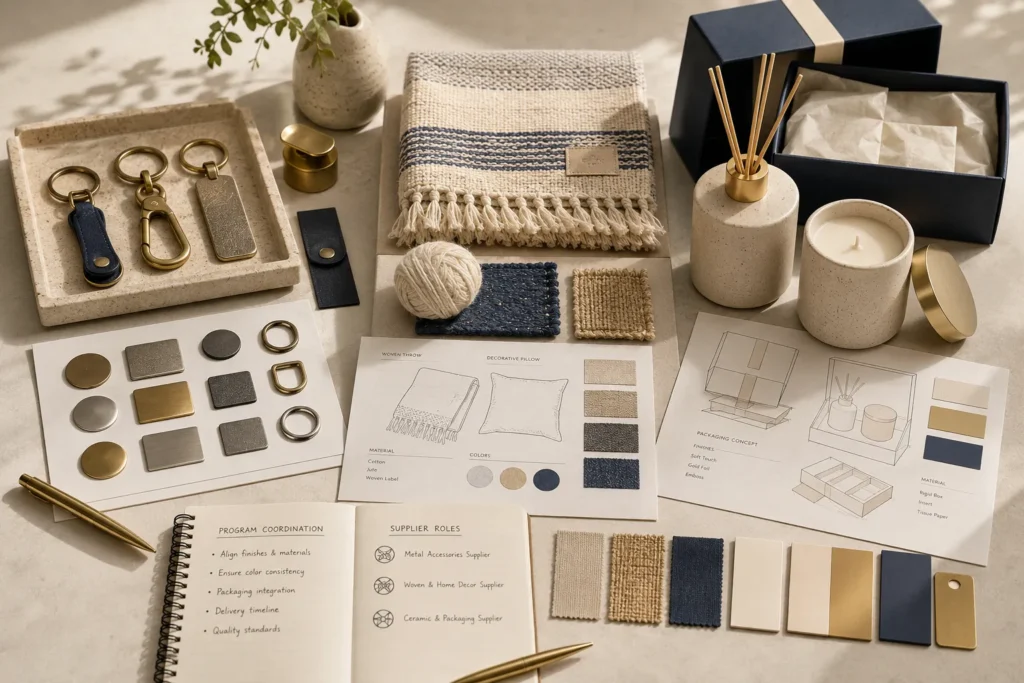
Product trend research can provide useful direction, but following every new color, material or design movement rarely leads to a strong product program. Retailers and brands need a more disciplined way to determine which trends are commercially relevant and which are unlikely to remain meaningful long enough to justify development.
The goal is not to ignore trends. It is to evaluate them in the context of the target market, brand positioning, product category, price level and development timeline. Good product trend research also helps teams focus resources on ideas with stronger commercial potential.
Start With Market Relevance
A trend may be highly visible online but still have limited relevance to a particular buyer or customer group.
Before developing a product around a trend, consider:
- Is the trend appearing across several reliable market sources?
- Does it fit the customer’s lifestyle, age group and price expectations?
- Is it relevant to the intended retail channel?
- Can it be applied naturally to the product category?
A finish that works well for fashion accessories may not translate effectively to seasonal décor or corporate gifts. Market relevance should always be evaluated at category level.
Review Brand Fit
Products should strengthen the overall brand presentation rather than appear disconnected from it.
A trend is more useful when it supports existing brand characteristics such as:
- premium or value positioning;
- modern or traditional styling;
- natural or highly decorative materials;
- restrained or expressive color direction;
- practical or gift-oriented presentation.
For example, a quiet luxury direction may work through warm neutrals, brushed metal, subtle textures and simplified packaging. A festive seasonal collection may require stronger color contrast, lighting effects and more expressive shapes.
The same trend should not be applied identically across every brand.
Evaluate Commercial Feasibility
A visually attractive concept is only useful if it can be produced within realistic cost, quantity and timing requirements.
Important questions include:
- Are the materials readily available?
- Does the finish require new tooling or special processing?
- Is the minimum order quantity compatible with the program?
- Will the design create additional testing or packaging requirements?
- Can production be completed within the required retail window?
This step prevents a trend-led concept from becoming commercially impractical.
Consider the Product Lifecycle
Some trends have a short visual impact but limited long-term value. Others represent broader changes in materials, color or consumer behavior.
A useful product direction should ideally support more than one selling period or allow future variations.
Examples include:
- adaptable color palettes;
- interchangeable decorative components;
- finishes that can be extended across several products;
- packaging systems suitable for multiple programs;
- shapes that can be refreshed without complete redevelopment.
This creates more value than developing a completely different product around every short-term trend.
Translate Trends Into Specific Product Decisions
A trend should eventually become a clear product brief.
Rather than describing a concept only as “modern,” “natural” or “premium,” define measurable details such as:
- target colors;
- material combinations;
- surface finishes;
- hardware color;
- packaging structure;
- branding method;
- retail price position;
- approval and production timeline.
Clear specifications make trend direction easier to communicate between buyers, designers, suppliers and packaging partners.
A Balanced Approach
The most effective product programs combine current market awareness with disciplined commercial judgment.
A trend is worth developing when it:
- is relevant to the target customer;
- supports the brand position;
- can be produced at the required cost and quantity;
- fits the available development timeline;
- can contribute to a coherent product collection.
TrustNovar supports buyers in reviewing materials, colors, finishes, product presentation and manufacturing feasibility before a concept moves into sampling and production.